
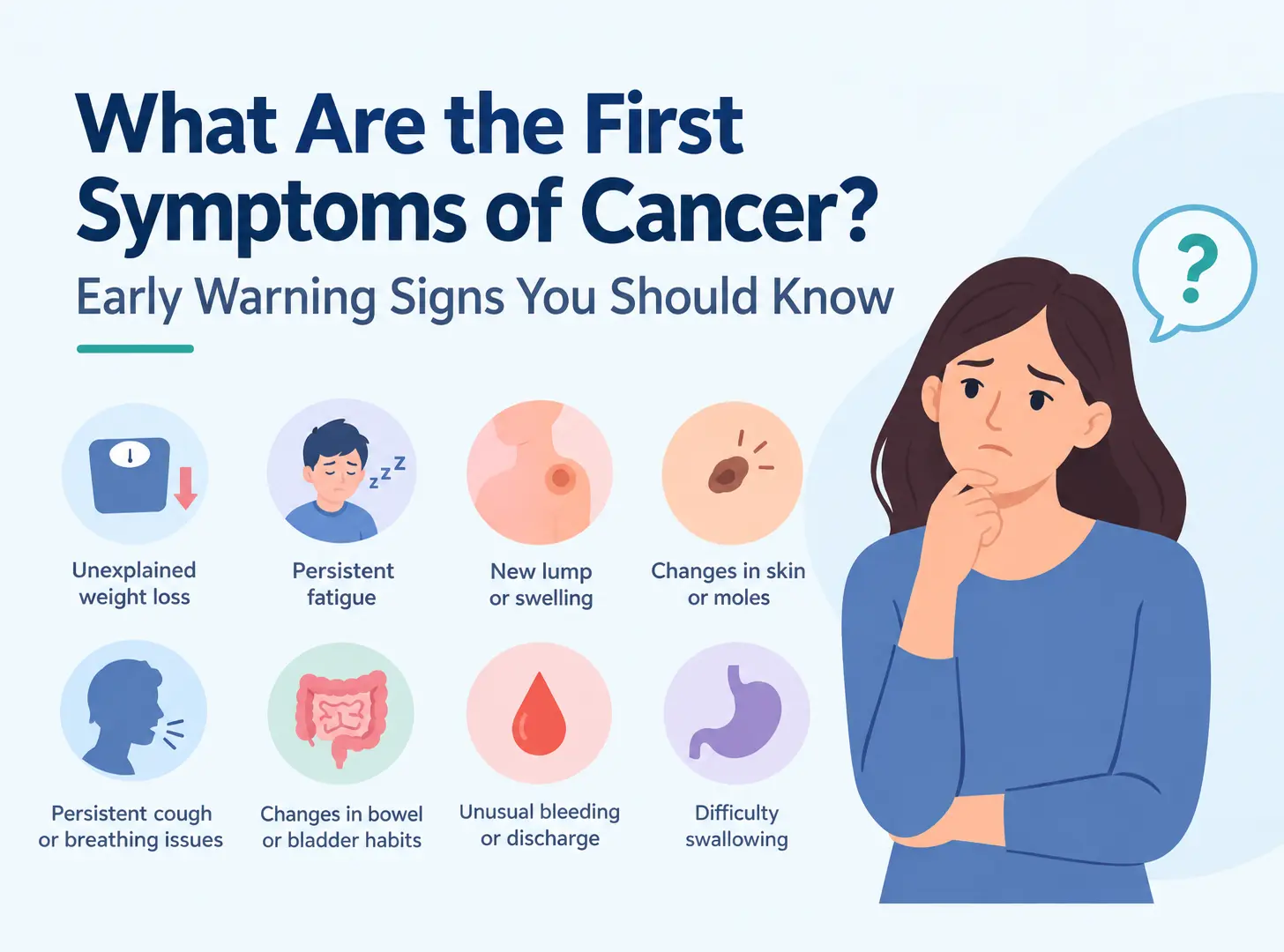
Cancer can develop silently and some of its early warning signs may be easy to overlook or mistake for everyday health problems. When cancer is detected early, treatment can often be more effective, making it important to understand changes in your body and know when they should be checked by a doctor.
There is no single symptom that confirms cancer, and many common symptoms have causes that are not related to cancer. However, persistent or unexplained changes, such as unexplained weight loss, unusual fatigue, a new lump, changes in the skin or abnormal bleeding, should not be ignored. In this guide, we’ll discuss the first symptoms of cancer, common early warning signs, when you should consult a doctor and how cancer is diagnosed. Understanding these signs can help you recognize concerning changes and seek medical advice at the right time.
What Are the First Symptoms of Cancer?
There is no single “first symptom” of cancer. Cancer is not one disease but hundreds, and each type behaves differently. Early symptoms depend on where the cancer starts, how fast it grows, and whether it presses on nearby organs, nerves or blood vessels. Some cancers cause noticeable signs early, such as a lump in the breast or a changing mole. Others, like pancreatic or ovarian cancer, can stay silent until later stages. Symptoms that are new, unexplained and persistent, lasting more than two to three weeks without improvement, deserve attention.
Common Early Warning Signs of Cancer
Cancer can cause different warning signs, and some may be subtle or mistaken for common health issues. Knowing these signs can help you recognize changes and seek medical advice when needed.
1. Unexplained Weight Loss
Losing a significant amount of weight without dieting or exercising more is one of the most common early signs. A loss of about 5% or more of your body weight over six to twelve months is worth investigating. It is especially associated with cancers of the pancreas, stomach, esophagus, and lung, though thyroid problems and digestive disorders can also cause it.
2. Persistent Fatigue
Everyone gets tired, but cancer-related fatigue is different. It doesn’t improve with rest or sleep and can interfere with daily life. It may occur because cancer cells use up the body’s energy or because of internal bleeding and anemia. Leukemia and colon cancer are often linked to early fatigue.
3. Unusual Lumps or Swelling
A new lump or thickening under the skin should always be checked. Common sites include the breast, testicles, neck, armpits, and groin. Not every lump is cancerous, but painless, hard lumps that persist or grow need medical evaluation. Swollen lymph nodes that last more than a few weeks without an obvious infection are also worth checking.
4. Unexplained Pain
Pain is usually not an early symptom, but it can be. Persistent headaches, back pain or bone pain with no clear cause may signal certain cancers. Back pain can be associated with colon, rectal or ovarian cancer, while ongoing bone pain may point to bone cancer or cancers that have spread. Pain that keeps getting worse or wakes you at night should be assessed.
5. Changes in Skin or Moles
Skin cancer is the most visible type, which makes it easier to catch early. Doctors often use the ABCDE rule for moles:
- Asymmetry: one half doesn’t match the other
- Border: edges are irregular or blurred
- Color: multiple shades or uneven color
- Diameter: larger than about 6 mm (a pencil eraser)
- Evolving: changes in size, shape or color
Also watch for sores that don’t heal, new growths and skin that becomes unusually dark, yellow or red.
6. Persistent Cough or Breathing Problems
A cough that lasts more than three weeks, especially if it worsens, brings up blood, or comes with hoarseness or chest pain, should be examined. Shortness of breath and repeated chest infections can be early signs of lung cancer. Smokers and former smokers should be particularly alert.
7. Changes in Bowel or Bladder Habits
Ongoing constipation, diarrhea, narrower stools, or a feeling that your bowels don’t empty completely can be signs of colorectal cancer. Blood in the stool or urine, pain when urinating, or needing to urinate far more often can indicate bowel, bladder or prostate cancer. These symptoms are often caused by infections or piles, but they should not be ignored if they persist.
8. Unusual Bleeding or Discharge
Unexplained bleeding is a key warning sign. Examples include coughing up blood, blood in the stool or urine, vaginal bleeding between periods or after menopause, and bleeding from the nipple. Any abnormal discharge that continues for weeks should also be checked.
9. Difficulty Swallowing
Trouble swallowing, a feeling of food sticking in the throat or chest or frequent choking can be early signs of cancer of the esophagus, throat or stomach. Persistent heartburn or indigestion that doesn’t respond to usual treatment may also be a clue.
10. Persistent Fever or Night Sweats
A fever that keeps returning without an infection or heavy night sweats that soak your bedclothes, can be linked to blood cancers such as leukemia and lymphoma. Fever is more often a sign that cancer has already affected the immune system, but it can appear early in some cases.
Persistent or unexplained symptoms should always be discussed with a healthcare professional.
Early Symptoms of Different Types of Cancer
Different cancers tend to have their own early signals:
- Breast cancer: a new lump, change in breast size or shape, nipple discharge or inversion, dimpling of the skin
- Lung cancer: a persistent cough, coughing up blood, wheezing, chest pain, breathlessness
- Colorectal cancer: blood in the stool, changes in bowel habits, abdominal discomfort, unexplained anemia
- Prostate cancer: difficulty starting urination, weak flow, frequent urination at night, blood in urine or semen
- Cervical cancer: unusual vaginal bleeding, bleeding after intercourse, unusual discharge, pelvic pain
- Oral cancer: mouth sores that don’t heal, white or red patches, difficulty chewing or swallowing, a lump in the mouth or neck (particularly relevant for tobacco chewers)
- Stomach cancer: persistent indigestion, feeling full quickly, nausea, unexplained weight loss
- Ovarian cancer: bloating, pelvic or abdominal pain, feeling full quickly, frequent urination
- Leukemia and lymphoma: fatigue, frequent infections, easy bruising, swollen lymph nodes, night sweats
- Skin cancer: new or changing moles, non-healing sores, scaly or bleeding patches
These lists are guides only and symptoms overlap with many non-cancerous conditions.
When Should You See a Doctor?
Book an appointment if you notice any of the following:
- A symptom that is new, unexplained, and lasts more than two to three weeks
- A symptom that keeps getting worse
- Any unexplained bleeding
- A lump that appears suddenly or keeps growing
- Significant weight loss without trying
- A combination of several symptoms at once
Seek urgent care if you cough up blood, have severe chest pain or breathing trouble, pass black or bloody stools, or have sudden severe pain. You should also get checked sooner if you have risk factors such as a family history of cancer, tobacco or heavy alcohol use, obesity, or long-term exposure to harmful chemicals or radiation. Don’t wait for a symptom to become painful or obvious. Most of the time the cause won’t be cancer, but if it is, an early visit can make a major difference.
How Is Cancer Diagnosed?
If a doctor suspects cancer, they usually follow a step-by-step process:
- Medical history and physical exam: the doctor asks about symptoms, family history, and lifestyle, and examines the affected area.
- Laboratory tests: blood, urine, or stool tests can reveal abnormalities. Some cancers release substances called tumor markers, though these alone cannot confirm cancer.
- Imaging tests: X-rays, ultrasound, CT scans, MRI, and PET scans help locate tumors and show their size and spread.
- Biopsy: a small sample of tissue is removed and examined under a microscope. A biopsy is the only way to confirm a cancer diagnosis.
- Staging: once cancer is confirmed, further tests determine how far it has spread, which guides treatment decisions.
The process can feel stressful, but each step brings you closer to clear answers and a treatment plan.
Can Cancer Be Detected Before Symptoms Appear?
Yes. Screening tests can find certain cancers before symptoms develop, when treatment works best. Common screening methods include:
- Mammograms for breast cancer
- Pap smear and HPV testing for cervical cancer
- Colonoscopy or stool-based tests for colorectal cancer
- Low-dose CT scans for lung cancer in high-risk smokers
- PSA blood tests for prostate cancer, after discussion with a doctor
- Oral examinations for people who use tobacco
The right tests and the age to begin depend on your age, sex, family history, and risk factors, so speak with your doctor about a screening schedule that suits you. Regular check-ups also matter, along with self-exams such as checking your breasts, skin, and mouth for changes.
Why Early Cancer Detection Is Important
Early detection saves lives. When cancer is found at a localized stage, survival rates are far higher than when it has spread. For example, five-year survival for localized breast and colorectal cancer is very high compared with advanced-stage disease.
Early detection also means:
- Less aggressive treatment: smaller tumors may need only surgery, without extensive chemotherapy or radiation
- Better quality of life: fewer side effects and a faster recovery
- Lower costs: treating early-stage cancer is generally less expensive than treating advanced disease
- More treatment options: doctors have more choices when the cancer is small and contained
Healthy habits help reduce your risk too, avoid tobacco, limit alcohol, eat plenty of fruits, vegetables and whole grains, stay physically active, maintain a healthy weight, protect your skin from the sun, and get recommended vaccines such as HPV and hepatitis B.
Conclusion
The first symptoms of cancer can sometimes be subtle and easy to overlook, such as unexplained weight loss, persistent fatigue, a new lump, changes in a mole, or unusual bleeding. While these symptoms do not necessarily mean cancer, any unexplained or persistent change in your health should be discussed with a qualified doctor. Paying attention to your body, getting recommended screenings and seeking medical advice when something feels unusual can support earlier detection and timely treatment. If you have concerns about cancer symptoms or need guidance about your treatment options, consulting the best oncologist in Vadodara can help you understand the next steps based on your individual condition.
At Aariv Cancer Care, patients can receive personalized guidance and cancer care throughout their diagnosis and treatment journey. If you notice persistent or concerning symptoms, don’t ignore them, speak with a healthcare professional for appropriate evaluation and advice.
Read More: What Is Skin Cancer? Types, Symptoms, Causes and Treatment
Frequently Asked Questions
Q1. What are the first symptoms of cancer?
There is no single first symptom of cancer. Common warning signs include unexplained weight loss, persistent fatigue, a new lump, unusual bleeding, persistent pain, changes in moles, and ongoing cough or breathing problems.
Q2. Can cancer be present without any symptoms?
Yes. Some cancers may not cause noticeable symptoms in their early stages. This is why recommended cancer screening and regular medical check-ups are important.
Q3. How long should I wait before seeing a doctor about a symptom?
If a new or unexplained symptom lasts for more than two to three weeks, it should be evaluated by a doctor. Seek medical attention sooner for unexplained bleeding, a growing lump, severe pain, or breathing difficulties.
Q4. Is a lump always a sign of cancer?
No. Many lumps are caused by non-cancerous conditions such as cysts, infections, or fatty tissue. However, a new, hard, painless, or growing lump should be checked by a healthcare professional.
Q5. How is cancer confirmed?
Doctors may use a physical examination, laboratory tests, imaging scans, and other diagnostic procedures. A biopsy, where a tissue sample is examined under a microscope, is used to confirm a cancer diagnosis.



3 Comments