
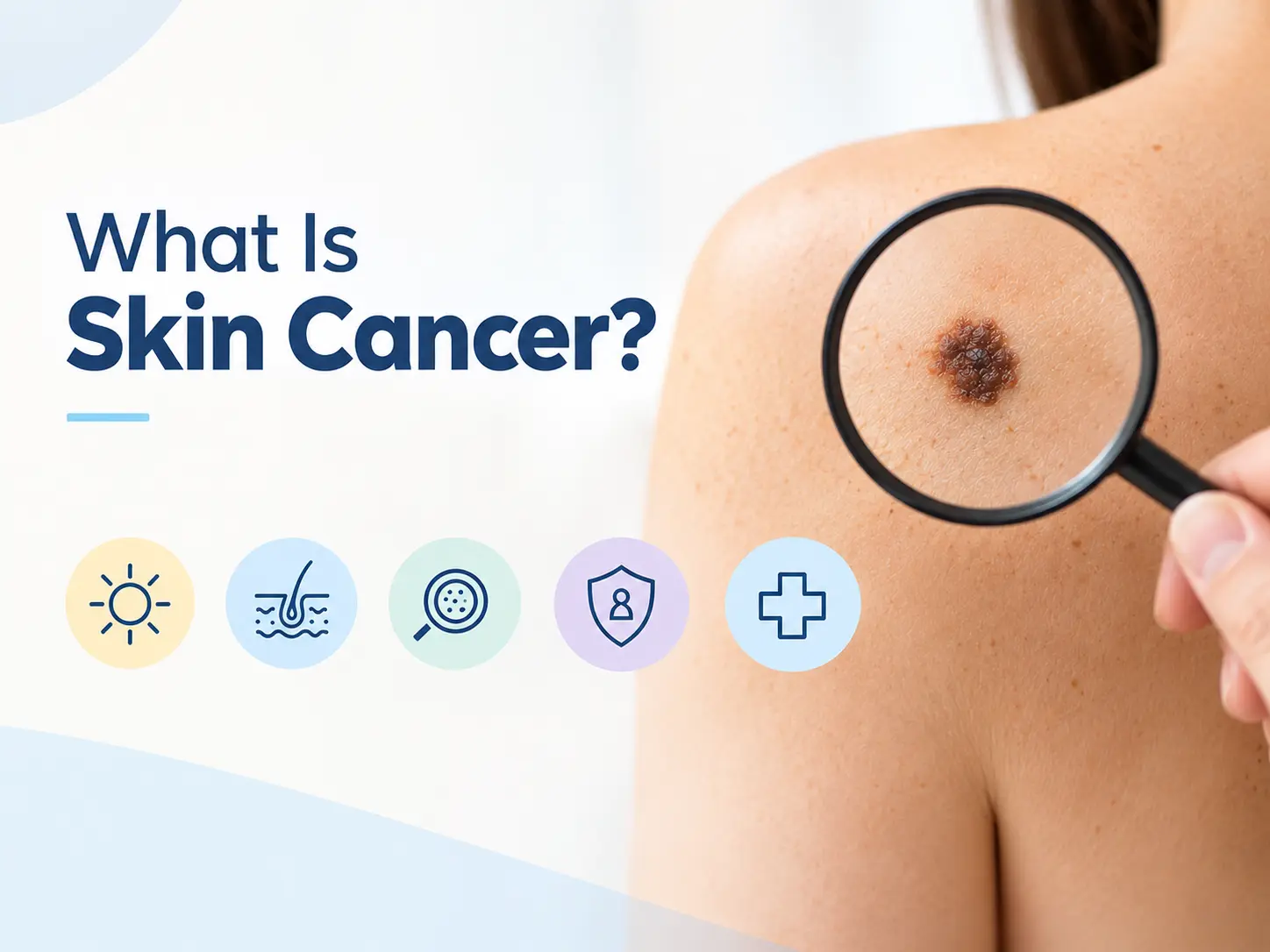
Skin cancer is the abnormal, uncontrolled growth of skin cells, most often triggered by damage to the DNA in skin cells that isn’t repaired properly. This damage causes cells to multiply rapidly and form malignant tumors. It is one of the most common cancers worldwide, but it’s also one of the most preventable and, when caught early, one of the most treatable.
Skin cancer usually develops in the epidermis, the outermost layer of skin, which makes it easier to detect through visual changes on the skin’s surface compared to cancers that develop deep inside the body. This is why regular self-examination and awareness of your skin’s normal appearance play such an important role in early detection.
What Causes Skin Cancer?
The primary cause of skin cancer is prolonged or intense exposure to ultraviolet (UV) radiation, which damages the DNA inside skin cells. This exposure can come from two main sources:
- Sunlight: The most common source of UV exposure, especially during peak hours between 10 a.m. and 4 p.m.
- Artificial UV sources: Tanning beds and sunlamps significantly increase risk, even with occasional use.
Other contributing factors include genetic mutations, a weakened immune system, exposure to certain chemicals (like arsenic), and radiation therapy for other conditions. While anyone can develop skin cancer, cumulative sun exposure and sunburns, particularly during childhood, substantially raise the lifetime risk.
Types of Skin Cancer
There are three primary types of skin cancer, each originating from different cells within the skin and varying in severity.
1. Basal Cell Carcinoma (BCC)
Basal cell carcinoma is the most common form of skin cancer, developing in the basal cells found in the lower part of the epidermis. It typically appears as a pearly or waxy bump, a flat flesh-colored or brown scar-like lesion, or a sore that bleeds, heals, and returns. BCC grows slowly and rarely spreads to other parts of the body, but if left untreated, it can grow deeper and cause significant local damage to surrounding tissue, including bone.
2. Squamous Cell Carcinoma (SCC)
Squamous cell carcinoma arises from the squamous cells in the upper layers of the skin. It often appears as a firm, red nodule, a flat lesion with a scaly, crusted surface, or a sore that doesn’t heal. SCC is more likely than BCC to grow deeper into the skin and, in some cases, spread to lymph nodes and distant organs if not treated promptly. It’s commonly found on sun-exposed areas like the face, ears, neck, lips, and hands.
3. Melanoma
Melanoma develops in melanocytes, the cells responsible for producing melanin (skin pigment). While it’s the least common of the three major types, it is by far the most dangerous because of its tendency to spread rapidly to other organs if not caught early. Melanoma can appear as a new mole or a change in an existing mole’s size, shape, or color. It’s often identified using the “ABCDE” rule: Asymmetry, Border irregularity, Color variation, Diameter larger than 6mm, and Evolving appearance over time.
Common Symptoms of Skin Cancer
Skin cancer symptoms can vary depending on the type, but general warning signs include:
- A new growth or sore that doesn’t heal within a few weeks
- A mole that changes in size, shape, or color
- A spot that looks different from all the other spots on your skin (the “ugly duckling” sign)
- Rough, scaly patches that may crust or bleed
- A shiny, pearly bump, especially one with visible blood vessels
- Itching, tenderness, or pain in a skin lesion
- Dark streaks or spots under a nail
Any unusual, persistent skin change is worth having evaluated by a healthcare professional, especially if it evolves over time.
Risk Factors for Skin Cancer
Several factors can increase the likelihood of developing skin cancer:
- Fair skin: Less melanin means less natural protection from UV damage
- History of sunburns: Especially severe or blistering sunburns in childhood
- Excessive sun or tanning bed exposure
- Living at high altitudes or near the equator: Greater UV exposure
- Family or personal history of skin cancer
- Weakened immune system: Due to illness or immunosuppressive medications
- Numerous or atypical moles
- Age: Risk increases with cumulative sun exposure over time
- Exposure to certain chemicals or radiation
Understanding your personal risk factors can help guide how often you should get skin checks and how vigilant you need to be with sun protection.
How Is Skin Cancer Diagnosed?
Diagnosis typically begins with a visual skin examination by a dermatologist, often using a dermatoscope to closely inspect suspicious lesions. If a spot appears concerning, the next step is usually a biopsy, where a small sample of the affected skin is removed and examined under a microscope. Depending on the biopsy results, additional tests may be needed to determine whether the cancer has spread, including:
- Imaging tests (CT scans, MRIs, or PET scans)
- Lymph node biopsy, particularly for melanoma
- Blood tests to check overall health and organ function
Early diagnosis significantly improves treatment outcomes, which is why routine skin checks are so valuable, particularly for those with elevated risk factors.
Stages of Skin Cancer
Staging helps doctors understand how advanced the cancer is and determines the most appropriate treatment plan. While staging systems vary slightly by cancer type, they generally follow this pattern:
- Stage 0: Abnormal cells are present only in the outer layer of skin (carcinoma in situ)
- Stage I: The cancer is small and localized, with no spread to lymph nodes
- Stage II: The tumor is larger or has certain higher-risk features, but still hasn’t spread beyond the skin
- Stage III: Cancer has spread to nearby lymph nodes
- Stage IV: Cancer has metastasized to distant organs, such as the lungs, liver or brain
Melanoma staging also factors in tumor thickness (Breslow depth) and ulceration, as these details influence prognosis and treatment decisions.
Skin Cancer Treatment Options
Treatment depends on the type, size, location, and stage of the cancer, as well as the patient’s overall health.
Surgery
Surgery is the most common treatment for skin cancer, especially for BCC and SCC. Options include:
- Excisional surgery: Removing the tumor along with a margin of healthy skin
- Mohs surgery: A precise technique where thin layers of skin are removed and examined one at a time until no cancer cells remain, minimizing damage to healthy tissue
- Curettage and electrodesiccation: Scraping away cancerous tissue and using an electric current to destroy remaining cells
Radiation Therapy
Radiation therapy uses high-energy beams to destroy cancer cells. It’s often used for patients who aren’t good surgical candidates, for cancers in difficult-to-treat locations, or as a follow-up to surgery to eliminate remaining cancer cells.
Chemotherapy
Chemotherapy uses drugs to kill fast-growing cancer cells. For skin cancer, it may be applied topically (as a cream) for superficial lesions, or given systemically for more advanced or metastatic cases.
Immunotherapy
Immunotherapy has transformed the treatment of advanced melanoma by helping the immune system recognize and attack cancer cells more effectively. Drugs known as checkpoint inhibitors are commonly used and have significantly improved survival rates for patients with advanced disease.
Targeted Therapy
Targeted therapy focuses on specific genetic mutations within cancer cells, such as the BRAF mutation found in some melanomas. These drugs work by blocking the specific pathways that allow cancer cells to grow and divide, often with fewer side effects than traditional chemotherapy.
How to Prevent Skin Cancer
While not all skin cancer is preventable, these steps can significantly reduce your risk:
- Apply broad-spectrum sunscreen (SPF 30 or higher) daily, even on cloudy days
- Reapply sunscreen every two hours, or more often when swimming or sweating
- Seek shade during peak sun hours (10 a.m. to 4 p.m.)
- Wear protective clothing, wide-brimmed hats, and UV-blocking sunglasses
- Avoid tanning beds entirely
- Perform regular self-skin checks to catch changes early
- Schedule annual skin exams with a dermatologist, especially if you have risk factors
When Should You See a Doctor?
You should consult a dermatologist if you notice:
- A new mole or growth that looks different from others on your body
- Any mole that changes in size, shape, color, or texture
- A sore that doesn’t heal within a few weeks
- Unusual itching, bleeding, or pain in a skin lesion
- A dark streak under a fingernail or toenail
When in doubt, it’s always better to have a professional evaluate a suspicious spot rather than wait and see.
Conclusion
Skin cancer is common, but early detection can make a significant difference in treatment and outcomes. Understanding its types, recognizing warning signs, and protecting your skin with sunscreen, avoiding tanning beds, and regular skin checks can help reduce risks. If you notice a new, unusual, or changing spot, consult a qualified healthcare professional without delay. Seeking timely medical advice can help ensure appropriate diagnosis, treatment, and ongoing care based on your individual needs. For expert cancer care and guidance, Aariv Cancer Care provides personalized support and treatment guidance for cancer patients. If you are looking for the best oncologist in Vadodara, Aariv Cancer Care can help you access professional oncology care throughout your cancer treatment journey.
Read More: How to Choose the Best Oncologist in Vadodara
Frequently Asked Questions
1. What are the common warning signs of skin cancer?
Common warning signs include a new or changing mole, a sore that does not heal, unusual bleeding or itching, rough or scaly patches, and a spot that looks different from other marks on the skin.
2. What are the main types of skin cancer?
The three main types are basal cell carcinoma (BCC), squamous cell carcinoma (SCC), and melanoma. Melanoma is less common but can spread more quickly than BCC or SCC.
3. What causes skin cancer?
Prolonged or intense exposure to ultraviolet (UV) radiation from sunlight and artificial sources such as tanning beds is a major cause. Other risk factors include family history, a weakened immune system, certain chemical exposures, and previous radiation exposure.
4. Can skin cancer be cured?
Skin cancer can often be successfully treated, particularly when detected early. Treatment and outcomes depend on the type, size, location, and stage of the cancer.
5. When should I see a doctor for a suspicious skin lesion?
You should consult a healthcare professional if you notice a new or changing mole, a sore that does not heal, unusual bleeding, itching or pain, or a dark streak under a fingernail or toenail.


1 Comment